

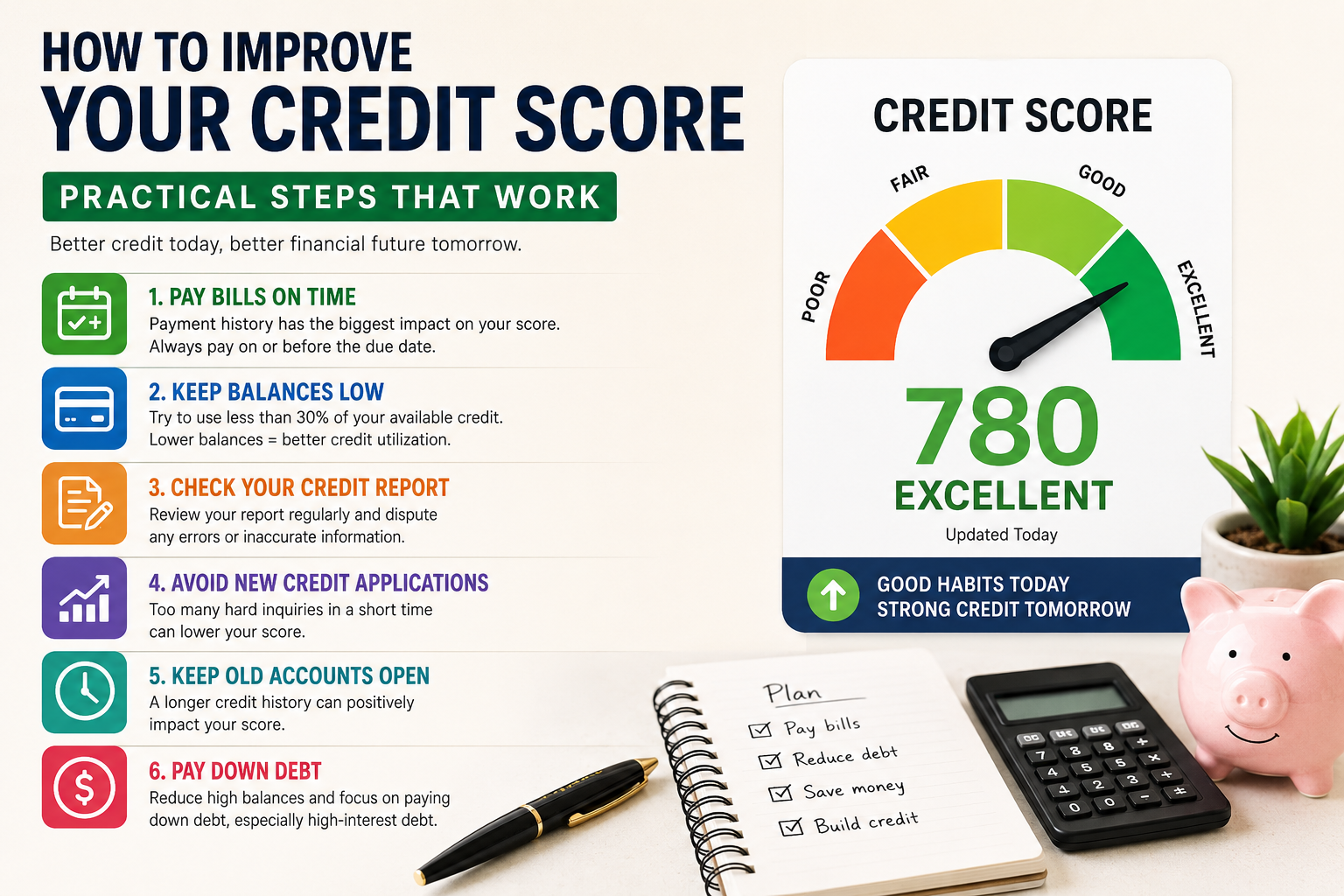

How to Improve Your Credit Score: Practical Steps That Work
A good credit score can make it easier to qualify for loans, credit cards, mortgages, and better interest rates. If your score is lower than you would like, the good news is that you can improve it over time by building consistent financial habits.
There is no legitimate overnight trick that can guarantee a major increase in your score. However, understanding what affects your credit and taking the right steps can help you make steady progress.
Check Your Credit Reports First
Before trying to improve your credit score, check your credit reports for inaccurate information. Your credit reports contain details about your credit accounts, payment history, balances, and other information used in calculating your score.
Look carefully for accounts you do not recognize, incorrect payment records, inaccurate balances, or personal information that is wrong.
If you find an error, you can dispute it with the appropriate credit reporting company and the company that provided the information. Correcting inaccurate information may help if the error was negatively affecting your credit.
Pay Your Bills on Time
Payment history is one of the most important factors in many credit-scoring models. A missed payment can potentially hurt your credit, particularly if it becomes seriously delinquent.
The easiest way to avoid this problem is to make payments on time every month. Consider setting up automatic payments or calendar reminders for credit cards, loans, and other bills.
Even if you cannot pay your entire credit card balance, making at least the required payment by the due date can help you avoid a late payment being reported.
Keep Your Credit Card Balances Low
Another important factor is your credit utilization. This refers to how much of your available revolving credit you are using.
For example, if your credit card limit is $5,000 and your balance is $1,500, your utilization is 30%.
Keeping balances relatively low can be beneficial for your credit profile. If possible, avoid regularly using a large percentage of your available credit.
One practical approach is to make payments during the billing cycle instead of waiting until the statement due date. However, you should always make sure you understand your card issuer’s payment rules.
Avoid Applying for Too Much Credit at Once
When you apply for several credit cards or loans within a short period, lenders may make hard inquiries into your credit reports.
A single inquiry usually has a relatively small effect, but applying for multiple accounts in a short period can make your credit profile appear riskier.
Instead of applying for every offer you receive, compare your options carefully and apply only when you have a genuine need for new credit.
Keep Older Credit Accounts Open When Appropriate
The age of your credit accounts can also contribute to your credit profile. Older accounts may provide a longer history of responsible credit management.
Closing a credit card does not necessarily make your credit score better. In some situations, closing an account can reduce your total available credit and potentially increase your credit utilization.
That does not mean you should keep every account forever. If a card has expensive fees or no longer fits your financial needs, closing it may still make sense. Consider the potential credit impact before making the decision.
Pay Down High-Interest Credit Card Debt
If you have credit card debt, reducing the balance can help your financial situation and may also improve your credit utilization.
Start by reviewing your balances, interest rates, and minimum payments. You can then create a realistic repayment strategy.
Some people focus on paying the highest-interest debt first, while others prefer to eliminate their smallest balance first for psychological motivation. The most important thing is choosing a strategy you can consistently follow.
Avoid taking on new debt simply to pay off existing balances unless you fully understand the costs and terms involved.
Don’t Expect an Instant 100-Point Increase
People often search for ways to improve their credit score by 100 points or increase their score quickly. While substantial improvement can happen for some people, there is no universal method that guarantees a specific number of points.
Credit scores depend on individual credit histories. Someone with a few late payments may see different results from someone with high credit card balances or a very limited credit history.
Focus on correcting problems and building positive habits rather than chasing a specific number.
Monitor Your Credit Regularly
Checking your credit regularly can help you notice changes early. Review your accounts and look for unfamiliar activity or unexpected changes.
If you notice something you do not recognize, investigate it promptly. Monitoring your credit can also help you understand which financial habits are helping or hurting your overall credit profile.
Remember that checking your own credit report is different from applying for new credit. Checking your own report generally does not create the same type of hard inquiry associated with a credit application.
Build Good Credit Habits Over Time
Improving your credit score is usually a process rather than a one-time action. Paying bills on time, managing credit card balances responsibly, limiting unnecessary applications, and keeping an eye on your credit reports can all contribute to healthier credit habits.
The exact amount of time required for improvement depends on your starting point and the information contained in your credit history.
Final Thoughts
If you want to improve your credit score, start with the basics: review your credit reports, pay bills on time, keep revolving balances under control, and avoid unnecessary new credit applications.
There is no reliable shortcut that works for everyone. Consistent financial behavior is generally more valuable than quick-fix promises. By understanding your credit profile and making responsible decisions each month, you can put yourself in a stronger position to improve your credit over time.