
Business Ideas for Women: Technology, Networking, and Small Business Opportunities

Starting a business can be an exciting way for women to build financial independence, develop new skills, and create something of their own. Today, women can choose from traditional home-based businesses, online services, creative work, and technology-focused ventures. Digital platforms have also made it easier to reach customers without needing a large physical store.

The best business idea depends on your skills, budget, interests, and the amount of time you can invest. Here are some practical opportunities to consider.

Business Ideas for Women

There are many business ideas for women that can be started on a small scale and expanded over time. Online tutoring, content writing, social media management, handmade products, clothing stores, baking, virtual assistance, and digital marketing are examples of businesses that can begin from home.

For women who enjoy creative work, a customized gift business, jewelry brand, or online boutique can be a good starting point. Those with professional skills can offer services such as graphic design, SEO, accounting, website management, or consulting.

Starting small is often a smart approach. Instead of investing heavily at the beginning, entrepreneurs can test their idea, understand customer demand, and gradually reinvest their earnings into the business.

Using Business Technology to Work Smarter

Modern business technology can make running a small company much easier. Entrepreneurs can use websites, online payment systems, accounting software, customer management tools, social media platforms, and communication applications to organize their daily operations.

For example, an online clothing seller can use social media to showcase products, messaging applications to communicate with customers, and digital payment options to receive orders. A freelance professional can use project-management and invoicing tools to manage several clients more efficiently.

Technology is particularly useful because it allows small businesses to compete with larger companies by improving communication, marketing, and customer service.

Why Business Networking Matters

Building relationships is another important part of entrepreneurship. Business networking allows entrepreneurs to meet potential customers, partners, suppliers, mentors, and other business owners.

Networking does not always require attending expensive events. Entrepreneurs can participate in online communities, professional groups, industry events, workshops, and social media discussions. Women-focused professional communities can also provide mentorship, collaboration opportunities, and access to useful resources. Organizations such as WomenInTechPK, for example, provide networking, mentorship, training, and collaboration opportunities for women in technology.

A strong network can lead to referrals and partnerships that may not be possible through advertising alone. The goal should be to build genuine professional relationships rather than simply trying to sell something.

Business Ideas for Small Business Owners

There are plenty of business ideas for small business owners who want to start with limited resources. A home bakery, online store, tutoring service, cleaning service, photography business, digital marketing agency, or freelance service can often be started with a relatively small setup.

Another option is to create digital products such as planners, templates, ebooks, educational materials, or design resources. These products can be created once and sold repeatedly through suitable online platforms.

Service-based businesses can also be attractive because they usually do not require large amounts of inventory. For example, someone with SEO knowledge can offer website optimization, content writing, or link-building services to businesses that need online visibility.

How to Choose the Right Business

Before starting, consider three important questions:

1. What skills do I already have?
Starting with an existing skill can reduce the learning curve and initial expenses.

2. What problem can I solve?
Successful businesses usually provide something customers actually need, whether it is a product, service, convenience, or specialized expertise.

3. How can I reach my customers?
Think about where your target customers spend time. Depending on the business, this could include Instagram, Facebook, Google, LinkedIn, marketplaces, local communities, or a personal website.

Researching the market before investing heavily can help reduce unnecessary risks. Recent business guides also emphasize starting small, testing demand, and choosing an opportunity that matches your skills and available resources.

Final Thoughts

Entrepreneurship does not always require a large investment or a complicated business plan. A useful skill, a clear target audience, and consistent effort can be enough to begin.

Whether you choose one of the many business ideas for women, use business technology to improve your operations, develop relationships through business networking, or launch one of several business ideas for small business owners, the most important step is to start with a practical idea and improve it as you learn from your customers.

With patience, planning, and the right tools, a small idea can gradually develop into a sustainable business.

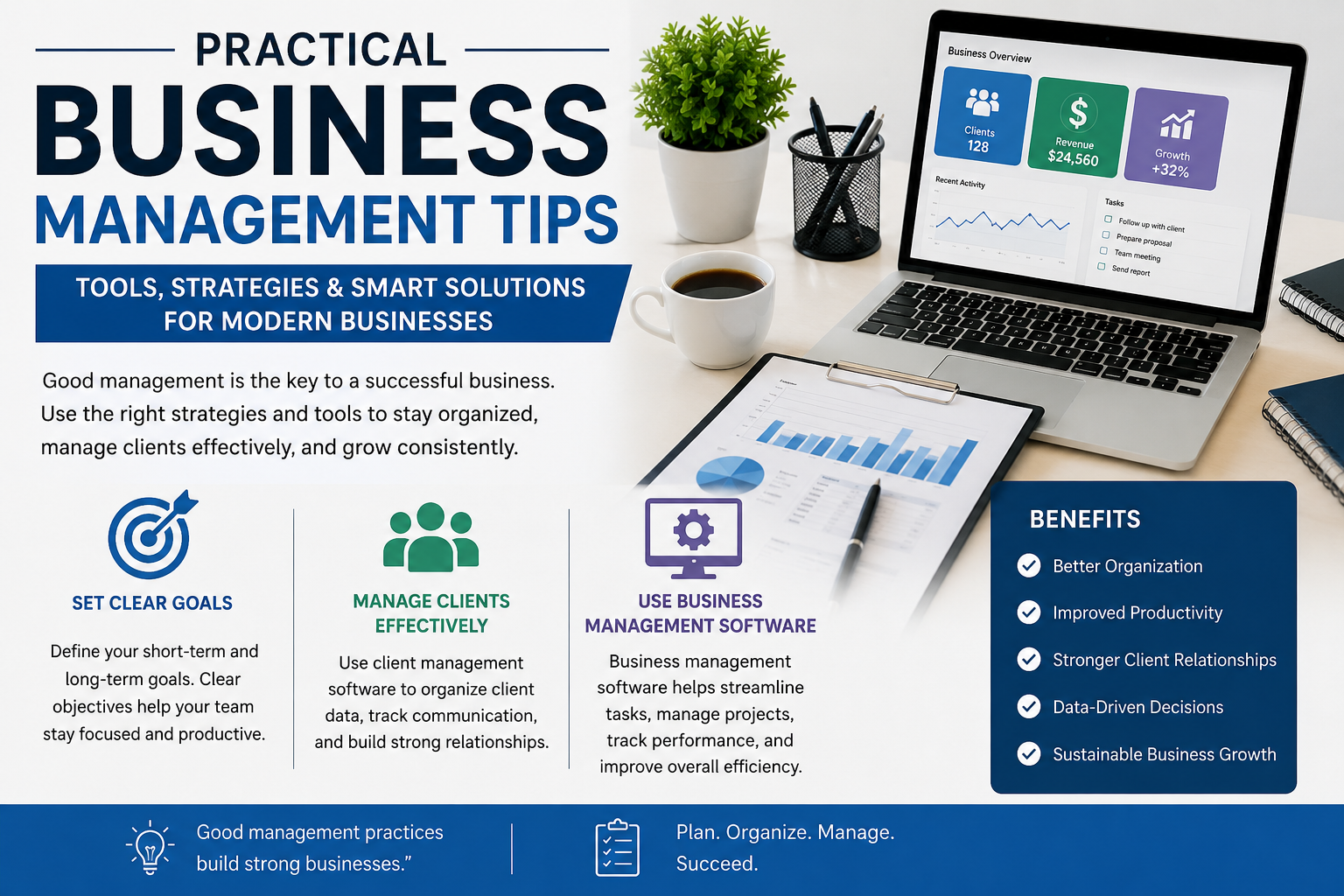
Practical Business Management Tips for Growing Companies

Running a business successfully requires more than having a good product or service. Owners and managers need to organize daily operations, maintain strong client relationships, and make informed decisions about growth. With the right business management tips, companies can improve productivity, reduce unnecessary costs, and create a better experience for both employees and customers.

1. Set Clear Business Goals

Every business should have clear short-term and long-term objectives. Define what you want to achieve and break larger goals into smaller, measurable tasks. This makes it easier for teams to understand their responsibilities and track progress.

Regularly reviewing your goals also helps identify areas that need improvement. If a particular strategy is not producing results, you can adjust it before wasting additional time and resources.

2. Keep Client Information Organized

Strong client relationships are essential for long-term business success. When customer information is scattered across emails, spreadsheets, and different applications, it can become difficult to follow conversations and manage important tasks.

Using client management software can help businesses organize customer details, communication records, appointments, sales information, and follow-up activities in one place. This allows teams to respond faster and maintain more consistent communication.

3. Automate Repetitive Tasks

Many businesses spend valuable hours handling repetitive administrative work. Tasks such as sending reminders, creating reports, updating records, and organizing schedules can often be automated.

Automation allows employees to focus on higher-value activities such as customer service, sales, planning, and product development. It can also reduce human errors and make daily operations more efficient.

4. Choose the Right Business Tools

Technology can make business operations considerably easier when the right tools are selected. Business management software can bring important functions together, including project management, customer relationships, employee tasks, financial tracking, and reporting.

Before choosing software, consider the company’s size, budget, workflow, and future requirements. A simple system that employees actually use is often more valuable than a complicated platform with features the business does not need.

5. Communicate With Your Team

Effective communication keeps employees aligned and prevents unnecessary misunderstandings. Managers should establish clear channels for sharing updates, assigning responsibilities, and discussing problems.

Short meetings, collaborative tools, and clear written instructions can help teams stay informed without creating excessive meetings or unnecessary communication.

6. Monitor Business Performance

Making decisions without reliable information can lead to avoidable mistakes. Businesses should regularly monitor important performance indicators such as revenue, customer retention, expenses, project completion, and sales conversion rates.

Analyzing these metrics helps managers understand what is working and where changes may be required. Over time, consistent measurement can support smarter and more sustainable growth.

7. Focus on Customer Experience

A satisfied customer is more likely to return and recommend a business to others. Make it easy for customers to ask questions, receive support, provide feedback, and resolve problems.

Personalized communication and timely follow-ups can make a significant difference. Businesses should also use customer feedback to identify weaknesses and improve their products or services.

Conclusion

Successful management depends on organization, communication, technology, and continuous improvement. Applying practical business management tips, maintaining customer information through reliable client management software, and selecting suitable business management software can help companies operate more efficiently.

The goal is not simply to use more tools, but to create a clear and organized system that helps employees work effectively while giving customers a consistent and positive experience.

10 Small Business Marketing Ideas to Grow Your Brand in 2026

Running a small business has become more competitive in 2026. Having a good product or service is important, but people also need to know that your business exists. Most customers now use Google, social media, email, online reviews, and local search when they are looking for something to buy.

Fortunately, you do not need a huge advertising budget to get noticed. A few practical marketing strategies, used consistently, can make a real difference. The key is to understand your audience, give them useful information, and make it easy for them to find and trust your business.

Here are ten small business marketing ideas that can help you build your brand and reach more customers in 2026.

1. Build a Professional Business Website

A website gives potential customers a place where they can learn more about your business. Before contacting a company or making a purchase, many people visit its website to check its services, products, prices, and contact details.

Your website does not need to be complicated. A clean design, simple navigation, fast loading speed, and mobile-friendly layout are usually more important than adding too many features.

Make sure visitors can quickly understand what your business does. Add useful service or product pages, an About section, contact information, and content that answers common customer questions.

A well-organized website can also give you a strong foundation for your SEO efforts.

2. Work on Local SEO

Local SEO is especially useful for businesses that serve customers in a particular city or region. When someone searches for a nearby restaurant, repair service, salon, shop, or other service, you want your business to have a chance of appearing in those results.

Start by using relevant location-based keywords on appropriate pages of your website. Keep your business name, address, phone number, and other important information accurate wherever your business is listed online.

Customer reviews can also help build confidence. Encourage happy customers to leave honest feedback and respond to reviews in a professional manner.

For eligible businesses, keeping a Google Business Profile complete and up to date is another useful part of a local marketing strategy.

3. Publish Useful Blog Posts

A business blog is more than a place to advertise your services. It can become a source of useful information for people who are considering buying from you.

Think about the questions customers ask before they purchase something. Those questions can become article topics.

For example, a home improvement company could publish articles about preparing a home for renovation, choosing materials, maintaining outdoor spaces, or avoiding common repair mistakes.

The same approach works in almost any industry. Instead of writing only about your company, create content that helps your potential customers solve real problems.

Over time, useful articles can attract visitors from search engines and introduce new people to your brand.

4. Be Consistent on Social Media

Social media gives small businesses a relatively simple way to stay connected with their audience. You do not necessarily need to create an account on every platform.

Choose the channels that make sense for your customers and concentrate your efforts there.

Your content can include product photos, quick tips, customer experiences, behind-the-scenes moments, short videos, and answers to common questions. You can also show how a product works or explain something related to your industry.

Posting consistently is more useful than publishing a large number of posts for a few days and then disappearing for several weeks.

5. Give Email Marketing a Try

Email remains a useful way to communicate with people who have already shown interest in your business.

You can use email to share company updates, helpful information, new products, special promotions, or useful recommendations. For example, an online store might send customers information about new arrivals or seasonal products.

Try to keep a balance between promotional and helpful messages. If every email feels like an advertisement, people may stop paying attention.

A simple newsletter sent regularly can help your business stay familiar to existing customers and encourage repeat purchases.

6. Ask Customers for Honest Reviews

Reviews can make a big difference when someone is deciding whether to try a business for the first time. People often want to know about other customers’ experiences before spending their money.

If a customer is happy with your product or service, you can politely ask them to share an honest review.

Do not try to manufacture positive feedback or pressure customers into leaving a particular rating. Genuine reviews are more useful because they give potential customers a realistic idea of what to expect.

It is also worth responding to reviews, including negative ones. A calm and professional response can show that your business takes customer feedback seriously.

7. Experiment With Short Videos

Short-form video has become an accessible marketing option for small businesses. You do not need an expensive camera or a professional studio to get started.

A phone can be enough for simple videos explaining a product, answering a common question, showing a process, or introducing the people behind your business.

One useful idea can also be turned into several pieces of content. For example, a detailed blog post could provide ideas for multiple short videos.

The goal should not simply be to make a video that gets views. Try to create something that is useful, interesting, or relevant to the people you want to reach.

8. Create a Simple Referral Program

Your existing customers can sometimes be one of the best sources of new customers. If people have a positive experience with your business, they may naturally recommend it to friends, relatives, or colleagues.

A referral program can give customers an additional reason to make that recommendation.

Depending on your business, you could offer a small discount, a free service, store credit, or another suitable reward for successful referrals.

Keep the process simple. Customers should understand how the referral works and what they receive without having to read complicated rules.

Referral marketing can be particularly helpful for local businesses and service providers where personal recommendations carry a lot of weight.

9. Improve Your SEO Strategy

Search engine optimization can help people discover your website when they search for information, products, or services related to your business.

Start with keyword research. Look for phrases that potential customers actually use and choose topics that match their search intent.

For example, instead of targeting only a broad phrase such as “marketing,” a small business website might target a more specific phrase such as “small business marketing ideas.”

Use the main keyword naturally in important parts of your page, including the title, introduction, headings, and URL when appropriate. Add related terms where they make sense.

There is no need to repeat the same keyword again and again. Good SEO content should sound natural and should primarily help the reader.

10. Measure What Is Working

Marketing becomes much easier to improve when you know which activities are producing results.

Keep track of useful information such as website visitors, leads, sales, email clicks, social media engagement, and conversions. You can then compare your results and decide where your time should go.

For example, if your blog articles are consistently bringing visitors to your website while a particular social media activity produces very little engagement, you may want to spend more time improving your content.

You do not have to use every marketing channel at the same time. Start with a few strategies, see what happens, and adjust your approach based on the results.

Conclusion

Growing a small business in 2026 does not necessarily require a massive marketing budget. What matters more is choosing strategies that fit your customers and using them consistently.

A professional website, local SEO, useful blog content, social media, email marketing, customer reviews, short videos, referrals, and regular performance tracking can all contribute to a stronger online presence.

Start with a few ideas instead of trying everything at once. Learn what your audience responds to, improve your content, and continue building trust. With time and consistent effort, these small marketing activities can help your business reach more people and create opportunities for long-term growth.