

Running a small business has become more competitive in 2026. Having a good product or service is important, but people also need to know that your business exists. Most customers now use Google, social media, email, online reviews, and local search when they are looking for something to buy.
Fortunately, you do not need a huge advertising budget to get noticed. A few practical marketing strategies, used consistently, can make a real difference. The key is to understand your audience, give them useful information, and make it easy for them to find and trust your business.
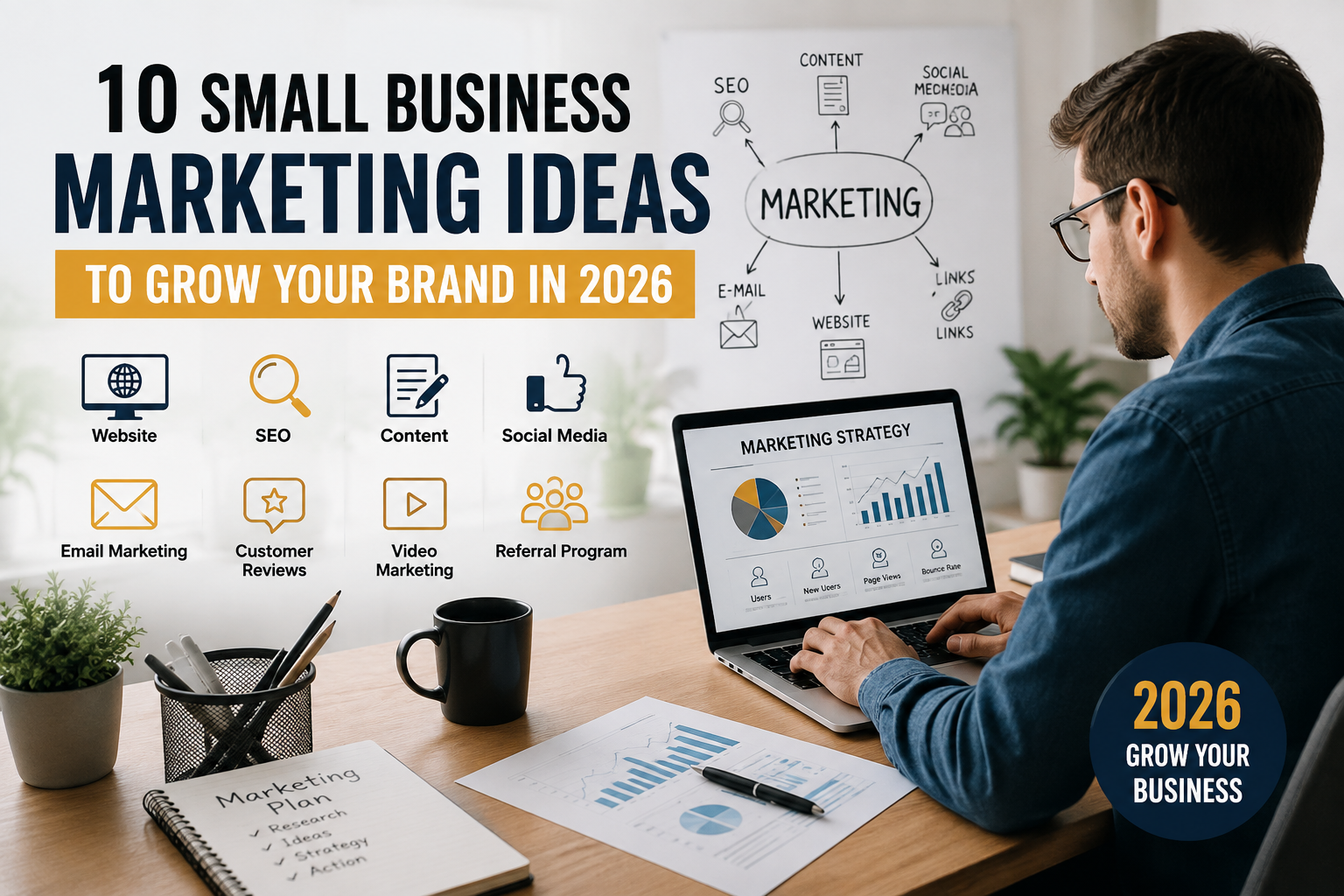
Here are ten small business marketing ideas that can help you build your brand and reach more customers in 2026.
1. Build a Professional Business Website
A website gives potential customers a place where they can learn more about your business. Before contacting a company or making a purchase, many people visit its website to check its services, products, prices, and contact details.
Your website does not need to be complicated. A clean design, simple navigation, fast loading speed, and mobile-friendly layout are usually more important than adding too many features.
Make sure visitors can quickly understand what your business does. Add useful service or product pages, an About section, contact information, and content that answers common customer questions.
A well-organized website can also give you a strong foundation for your SEO efforts.
2. Work on Local SEO
Local SEO is especially useful for businesses that serve customers in a particular city or region. When someone searches for a nearby restaurant, repair service, salon, shop, or other service, you want your business to have a chance of appearing in those results.
Start by using relevant location-based keywords on appropriate pages of your website. Keep your business name, address, phone number, and other important information accurate wherever your business is listed online.
Customer reviews can also help build confidence. Encourage happy customers to leave honest feedback and respond to reviews in a professional manner.
For eligible businesses, keeping a Google Business Profile complete and up to date is another useful part of a local marketing strategy.
3. Publish Useful Blog Posts
A business blog is more than a place to advertise your services. It can become a source of useful information for people who are considering buying from you.
Think about the questions customers ask before they purchase something. Those questions can become article topics.
For example, a home improvement company could publish articles about preparing a home for renovation, choosing materials, maintaining outdoor spaces, or avoiding common repair mistakes.
The same approach works in almost any industry. Instead of writing only about your company, create content that helps your potential customers solve real problems.
Over time, useful articles can attract visitors from search engines and introduce new people to your brand.
4. Be Consistent on Social Media
Social media gives small businesses a relatively simple way to stay connected with their audience. You do not necessarily need to create an account on every platform.
Choose the channels that make sense for your customers and concentrate your efforts there.
Your content can include product photos, quick tips, customer experiences, behind-the-scenes moments, short videos, and answers to common questions. You can also show how a product works or explain something related to your industry.
Posting consistently is more useful than publishing a large number of posts for a few days and then disappearing for several weeks.
5. Give Email Marketing a Try
Email remains a useful way to communicate with people who have already shown interest in your business.
You can use email to share company updates, helpful information, new products, special promotions, or useful recommendations. For example, an online store might send customers information about new arrivals or seasonal products.
Try to keep a balance between promotional and helpful messages. If every email feels like an advertisement, people may stop paying attention.
A simple newsletter sent regularly can help your business stay familiar to existing customers and encourage repeat purchases.
6. Ask Customers for Honest Reviews
Reviews can make a big difference when someone is deciding whether to try a business for the first time. People often want to know about other customers’ experiences before spending their money.
If a customer is happy with your product or service, you can politely ask them to share an honest review.
Do not try to manufacture positive feedback or pressure customers into leaving a particular rating. Genuine reviews are more useful because they give potential customers a realistic idea of what to expect.
It is also worth responding to reviews, including negative ones. A calm and professional response can show that your business takes customer feedback seriously.
7. Experiment With Short Videos
Short-form video has become an accessible marketing option for small businesses. You do not need an expensive camera or a professional studio to get started.
A phone can be enough for simple videos explaining a product, answering a common question, showing a process, or introducing the people behind your business.
One useful idea can also be turned into several pieces of content. For example, a detailed blog post could provide ideas for multiple short videos.
The goal should not simply be to make a video that gets views. Try to create something that is useful, interesting, or relevant to the people you want to reach.
8. Create a Simple Referral Program
Your existing customers can sometimes be one of the best sources of new customers. If people have a positive experience with your business, they may naturally recommend it to friends, relatives, or colleagues.
A referral program can give customers an additional reason to make that recommendation.
Depending on your business, you could offer a small discount, a free service, store credit, or another suitable reward for successful referrals.
Keep the process simple. Customers should understand how the referral works and what they receive without having to read complicated rules.
Referral marketing can be particularly helpful for local businesses and service providers where personal recommendations carry a lot of weight.
9. Improve Your SEO Strategy
Search engine optimization can help people discover your website when they search for information, products, or services related to your business.
Start with keyword research. Look for phrases that potential customers actually use and choose topics that match their search intent.
For example, instead of targeting only a broad phrase such as “marketing,” a small business website might target a more specific phrase such as “small business marketing ideas.”
Use the main keyword naturally in important parts of your page, including the title, introduction, headings, and URL when appropriate. Add related terms where they make sense.
There is no need to repeat the same keyword again and again. Good SEO content should sound natural and should primarily help the reader.
10. Measure What Is Working
Marketing becomes much easier to improve when you know which activities are producing results.
Keep track of useful information such as website visitors, leads, sales, email clicks, social media engagement, and conversions. You can then compare your results and decide where your time should go.
For example, if your blog articles are consistently bringing visitors to your website while a particular social media activity produces very little engagement, you may want to spend more time improving your content.
You do not have to use every marketing channel at the same time. Start with a few strategies, see what happens, and adjust your approach based on the results.
Conclusion
Growing a small business in 2026 does not necessarily require a massive marketing budget. What matters more is choosing strategies that fit your customers and using them consistently.
A professional website, local SEO, useful blog content, social media, email marketing, customer reviews, short videos, referrals, and regular performance tracking can all contribute to a stronger online presence.
Start with a few ideas instead of trying everything at once. Learn what your audience responds to, improve your content, and continue building trust. With time and consistent effort, these small marketing activities can help your business reach more people and create opportunities for long-term growth.