
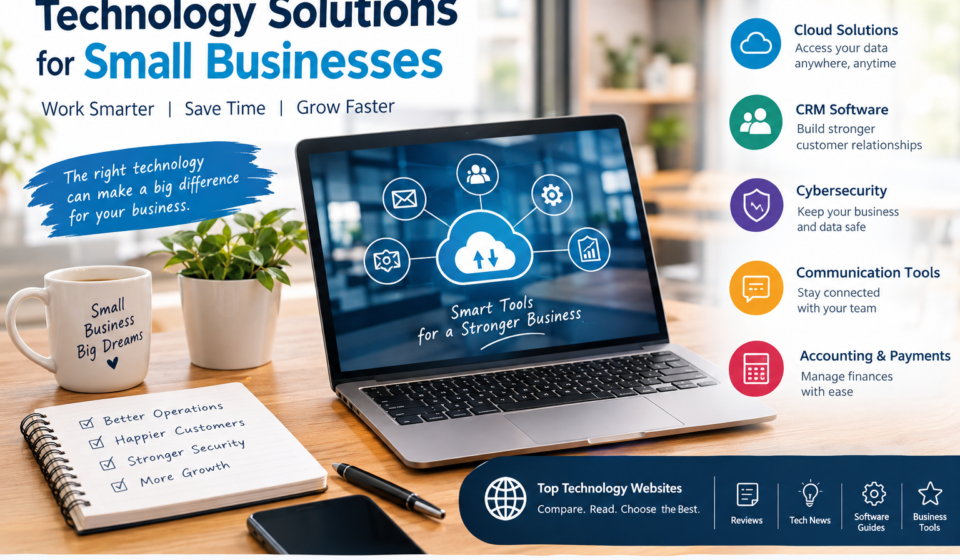

Technology has become an important part of running a successful small business. From managing customers and employees to protecting business data and improving online sales, the right technology can save time and help businesses compete with larger companies.
For small businesses in the United States, choosing practical and affordable technology solutions can make daily operations easier while creating better opportunities for growth. Research from the U.S. Chamber of Commerce has also found that technology helps small businesses communicate with customers, find new customers, and operate more efficiently.
What Are Technology Solutions for Small Businesses?
Technology solutions are digital tools, software, and services that help businesses manage their everyday operations. These can include cloud storage, customer relationship management software, cybersecurity tools, accounting platforms, communication systems, and website solutions.
Instead of using separate manual processes, a small business can use technology to organize information, automate repetitive tasks, and improve communication.
Technology for Small Business: Essential Tools
The best technology for small business depends on the company’s size, industry, budget, and goals. However, several types of technology can benefit almost every small business.
1. Cloud-Based Software
Cloud technology allows businesses to access files, applications, and important information through the internet. Employees can work from different locations while keeping business information organized.
Cloud solutions can also reduce the need for expensive physical infrastructure and make it easier for businesses to scale as they grow.
2. Customer Relationship Management
CRM software helps businesses organize customer information, sales leads, conversations, and follow-ups in one place.
For example, a service-based company can use a CRM to track potential customers and make sure important leads do not get forgotten.
3. Cybersecurity Solutions
Cybersecurity should be a priority for small businesses because companies store valuable customer, financial, and business information.
Businesses can improve protection by using strong passwords, multi-factor authentication, security software, regular updates, employee training, and reliable backups.
4. Online Communication Tools
Communication platforms make it easier for teams to work together. Video meetings, messaging applications, shared documents, and project management tools can help employees stay connected whether they work in an office or remotely.
5. Accounting and Payment Technology
Accounting software can simplify invoices, expenses, payroll, and financial records. Digital payment solutions can also make it easier for customers to pay for products and services.
Automation can reduce repetitive administrative work and help business owners keep better track of their finances.
Best Technology Websites for Business Owners
Business owners can also use technology websites to research software, learn about new trends, and compare solutions before making a purchase.
Some useful types of technology websites include technology news publications, software review platforms, cybersecurity resources, cloud-service providers, and business technology blogs.
When researching a technology solution, business owners should look beyond popularity. Important factors include pricing, security, customer support, integrations, ease of use, and whether the software can grow with the company.
How Technology Can Help a Small Business Grow
The right technology can improve several areas of a business at the same time. Automation can reduce repetitive tasks, cloud tools can improve collaboration, and CRM systems can help companies manage customer relationships more effectively.
A professional website is also an important part of a modern business strategy. It can act as a digital storefront where customers learn about products, services, reviews, and contact information.
Technology can also help small companies compete with larger businesses by giving them access to tools that were previously available mainly to larger organizations.
Choosing the Right Technology Solution
Small businesses should not choose technology simply because it is popular. The best approach is to identify the company’s biggest problems first.
For example, a business struggling with customer follow-ups may need a CRM, while a company concerned about data security may need better cybersecurity and backup solutions.
Before choosing a platform, consider:
- Monthly and yearly costs
- Ease of use
- Security features
- Customer support
- Integration with existing tools
- Scalability
- Mobile accessibility
- Data backup options
Final Thoughts
Modern technology can help small businesses work more efficiently, communicate with customers, protect important information, and create new opportunities for growth.
The best technology solutions are not necessarily the most expensive ones. Businesses should focus on tools that solve real problems and provide measurable value. By choosing practical technology for small business needs and researching reliable technology websites before making decisions, business owners can build a stronger digital foundation for long-term growth.