
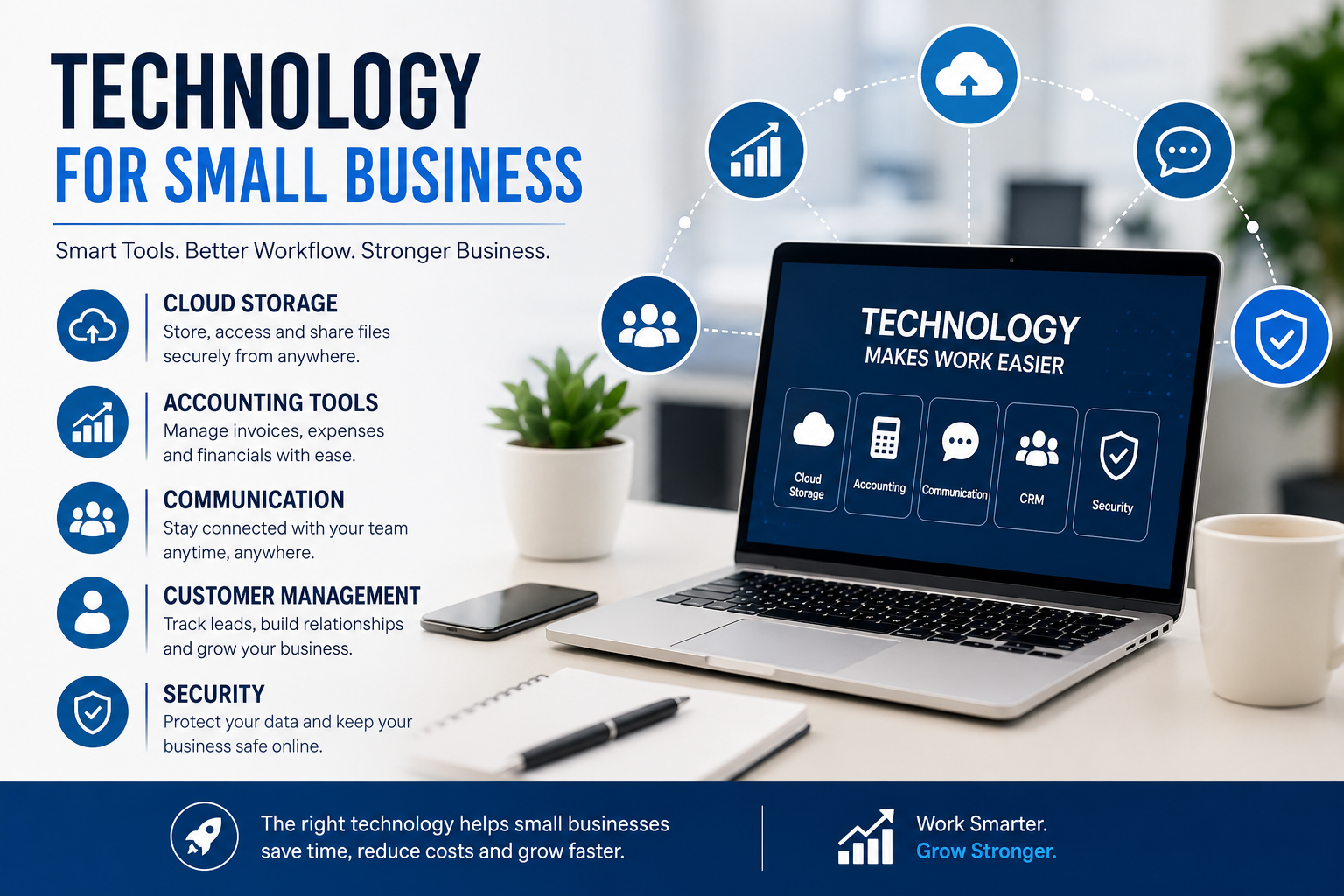

Technology has become an important part of running a small business. A company does not need a huge budget or a large IT department to benefit from modern tools. The right technology can make everyday work easier, improve communication, save time, and help a small team compete with much larger businesses.
From accounting software to communication platforms and cloud storage, there are many options available today. The challenge is choosing technology that actually solves a business problem instead of adding unnecessary complexity.
Why Technology Matters for Small Business
Small businesses often work with limited staff, time, and money. Employees may have to handle several responsibilities at once, which can make routine tasks difficult to manage. Technology can reduce this pressure by taking care of repetitive work and keeping important information organized.
For example, cloud-based software allows employees to access files from different locations. Online payment systems make it easier to receive money from customers, while project management tools help teams keep track of deadlines and responsibilities.
Good technology should not simply look impressive. It should make the business more efficient and give employees more time to focus on customers and important projects.
Useful Technology for Small Business
There are several areas where technology can make a noticeable difference.
1. Cloud Storage
Cloud storage allows businesses to keep documents and other important files online. Instead of depending on one office computer, employees can access approved files from different devices.
This can also make collaboration easier. Team members can work on documents, share information, and keep files organized without constantly sending attachments through email.
2. Accounting and Financial Tools
Managing finances is one of the most important responsibilities of a small business. Accounting software can help with invoices, expenses, payments, and financial records.
Automating simple financial tasks can reduce manual errors and save business owners considerable time. It also makes it easier to understand where money is being spent.
3. Communication Software
Email remains useful, but businesses often need faster ways to communicate internally. Messaging and video meeting platforms can help employees communicate when they are working from different locations.
A well-organized communication system can prevent important information from getting lost in long email conversations.
4. Customer Management Tools
Customer relationship management software can help businesses keep track of customers, leads, conversations, and sales opportunities.
Even a small company can benefit from having customer information stored in one place. Employees can quickly understand previous interactions and provide more consistent service.
Choosing the Best Technology Websites
The internet is full of technology resources, but not every website provides useful information for business owners. The best technology websites usually explain new products, software, security developments, and practical business applications in a way that is easy to understand.
When researching a new tool, business owners should look beyond promotional claims. It is useful to compare features, pricing, security, customer reviews, and compatibility before making a decision.
Technology websites can also help small businesses stay informed about new developments. A tool that may seem unnecessary today could become useful as the company grows.
Security Should Be a Priority
Using more technology also creates additional security responsibilities. Small businesses can become targets for phishing attacks, stolen passwords, malware, and other online threats.
Basic security practices can make a significant difference. Businesses should use strong passwords, enable two-factor authentication where possible, keep software updated, and regularly back up important information.
Employees should also receive basic cybersecurity training. A simple mistake, such as opening a suspicious attachment, can create serious problems for a company.
Do Not Buy Technology Just Because It Is New
One common mistake is purchasing software simply because other businesses are using it. Every company has different needs.
Before choosing a technology solution, ask a few simple questions:
- What problem will this tool solve?
- Will employees actually use it?
- Does it fit the current budget?
- Can it grow with the business?
- Does it protect customer and company information?
These questions can prevent unnecessary expenses and help businesses choose tools with real long-term value.
Final Thoughts
Technology for small business is not about having the largest collection of software. It is about choosing practical solutions that make work easier and improve the customer experience.
Cloud services, accounting tools, communication platforms, customer management systems, and security software can all play an important role. By researching options through reliable best technology websites and selecting tools based on actual business needs, small companies can use technology to work smarter, remain competitive, and prepare for future growth.