
Running a business successfully requires more than having a good product or service. Owners and managers need to organize daily operations, maintain strong client relationships, and make informed decisions about growth. With the right business management tips, companies can improve productivity, reduce unnecessary costs, and create a better experience for both employees and customers.
1. Set Clear Business Goals
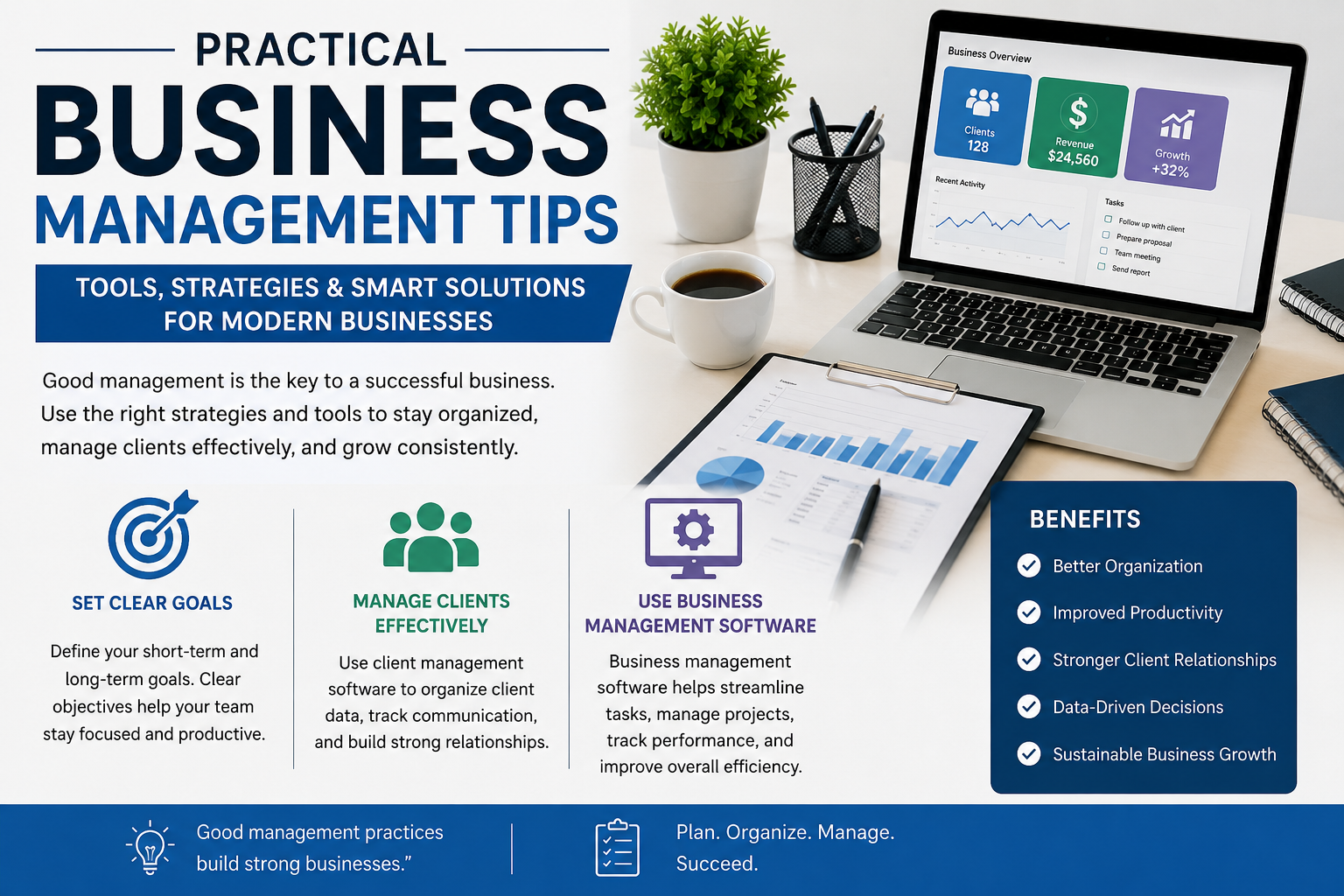
Every business should have clear short-term and long-term objectives. Define what you want to achieve and break larger goals into smaller, measurable tasks. This makes it easier for teams to understand their responsibilities and track progress.
Regularly reviewing your goals also helps identify areas that need improvement. If a particular strategy is not producing results, you can adjust it before wasting additional time and resources.
2. Keep Client Information Organized
Strong client relationships are essential for long-term business success. When customer information is scattered across emails, spreadsheets, and different applications, it can become difficult to follow conversations and manage important tasks.
Using client management software can help businesses organize customer details, communication records, appointments, sales information, and follow-up activities in one place. This allows teams to respond faster and maintain more consistent communication.
3. Automate Repetitive Tasks
Many businesses spend valuable hours handling repetitive administrative work. Tasks such as sending reminders, creating reports, updating records, and organizing schedules can often be automated.
Automation allows employees to focus on higher-value activities such as customer service, sales, planning, and product development. It can also reduce human errors and make daily operations more efficient.
4. Choose the Right Business Tools
Technology can make business operations considerably easier when the right tools are selected. Business management software can bring important functions together, including project management, customer relationships, employee tasks, financial tracking, and reporting.
Before choosing software, consider the company’s size, budget, workflow, and future requirements. A simple system that employees actually use is often more valuable than a complicated platform with features the business does not need.
5. Communicate With Your Team
Effective communication keeps employees aligned and prevents unnecessary misunderstandings. Managers should establish clear channels for sharing updates, assigning responsibilities, and discussing problems.
Short meetings, collaborative tools, and clear written instructions can help teams stay informed without creating excessive meetings or unnecessary communication.
6. Monitor Business Performance
Making decisions without reliable information can lead to avoidable mistakes. Businesses should regularly monitor important performance indicators such as revenue, customer retention, expenses, project completion, and sales conversion rates.
Analyzing these metrics helps managers understand what is working and where changes may be required. Over time, consistent measurement can support smarter and more sustainable growth.
7. Focus on Customer Experience
A satisfied customer is more likely to return and recommend a business to others. Make it easy for customers to ask questions, receive support, provide feedback, and resolve problems.
Personalized communication and timely follow-ups can make a significant difference. Businesses should also use customer feedback to identify weaknesses and improve their products or services.
Conclusion
Successful management depends on organization, communication, technology, and continuous improvement. Applying practical business management tips, maintaining customer information through reliable client management software, and selecting suitable business management software can help companies operate more efficiently.
The goal is not simply to use more tools, but to create a clear and organized system that helps employees work effectively while giving customers a consistent and positive experience.