
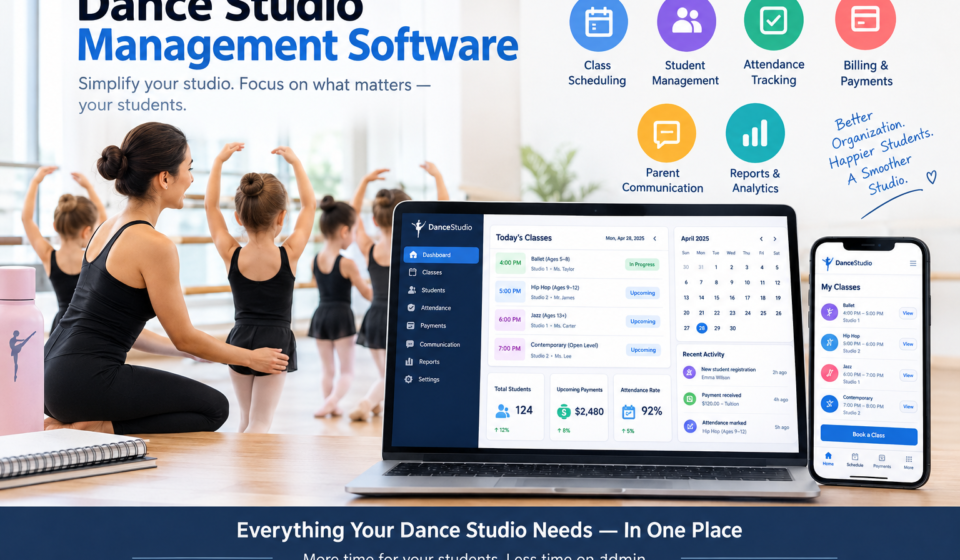

Running a dance studio involves much more than teaching classes. Studio owners have to manage schedules, student registrations, attendance, payments, instructors, parents, and daily administrative tasks. As the number of students and classes grows, handling everything manually with spreadsheets, calendars, and messages can become difficult.
Dance studio management software brings these activities together in one centralized system. Modern platforms commonly include class scheduling, student management, attendance tracking, billing, online payments, reporting, and communication tools.
What Is Dance Studio Management Software?
Dance studio management software is a digital platform designed to help dance schools and studios organize their everyday operations. Instead of using separate tools for scheduling, payments, student records, and attendance, owners can manage these tasks through one system.
For studios with multiple instructors, rooms, class levels, and recurring sessions, centralized management can make daily administration easier and reduce the amount of manual work.
Key Features to Look For
1. Class Scheduling
Scheduling is one of the most important functions of dance studio software. A good platform can help owners create recurring classes, assign instructors and rooms, manage schedule changes, and monitor class availability.
Online booking can also allow students or parents to view available classes and register without having to contact the studio manually.
2. Student and Family Management
Dance studios often work with families who have more than one student enrolled. Management software can keep student profiles, enrollment history, contact details, and family information organized in one place.
This makes it easier for staff to find important information without searching through paper records or multiple spreadsheets.
3. Attendance Tracking
Digital attendance tracking allows instructors to record who attends each class. Owners can then review attendance history and identify patterns such as frequent absences.
Some platforms can also connect attendance with credits, make-up classes, or student records, helping reduce administrative work.
4. Billing and Online Payments
Managing tuition manually can take significant time. Dance studio software can support invoices, recurring payments, payment records, discounts, and online payment processing.
Automated billing can also help studios keep track of outstanding balances and reduce the need for repeated payment reminders.
5. Parent Communication
Communication is important for dance studios, especially those working with children. Software can help studios send reminders, schedule updates, payment notifications, and other important information to parents and students.
Keeping communication connected to student records can make it easier for staff to manage questions and updates.
6. Reporting and Analytics
Reports can give studio owners a clearer picture of enrollment, attendance, revenue, payments, and class activity. This information can help owners understand how their studio is performing and identify areas that need attention.
Benefits of Using Dance Studio Software
The biggest benefit is organization. Instead of switching between spreadsheets, calendars, payment systems, and messaging apps, staff can access important information from a centralized platform.
Other potential benefits include:
- Less manual administrative work
- Easier class scheduling
- Faster student registration
- Better attendance records
- Simplified billing and payments
- Easier parent communication
- More organized student information
- Better visibility into studio operations
These features are especially useful as a studio grows and manages more students, instructors, and classes.
How to Choose the Right Software
Before choosing a platform, consider the actual needs of your studio. A small studio may only need scheduling, registration, attendance, and payments, while a larger operation may require family accounts, advanced reporting, staff management, recital tools, and multiple-location support.
It is also useful to test the software with a real class schedule before purchasing. Check how easily staff can create classes, register students, record attendance, generate invoices, and make schedule changes.
Final Thoughts
Dance studio management software can simplify many of the administrative responsibilities involved in running a modern dance business. From scheduling and student registration to attendance, billing, and communication, the right system can bring everyday studio operations into one organized workflow.
For growing dance studios, investing in a centralized management platform can make administrative processes easier to manage while giving staff more time to focus on students, classes, and the overall studio experience.